


Babies under six months do not need added sugar. Breast milk already contains its own natural sugar, called lactose, which a baby's body is designed to digest. India's food regulator now wants that principle written into law.
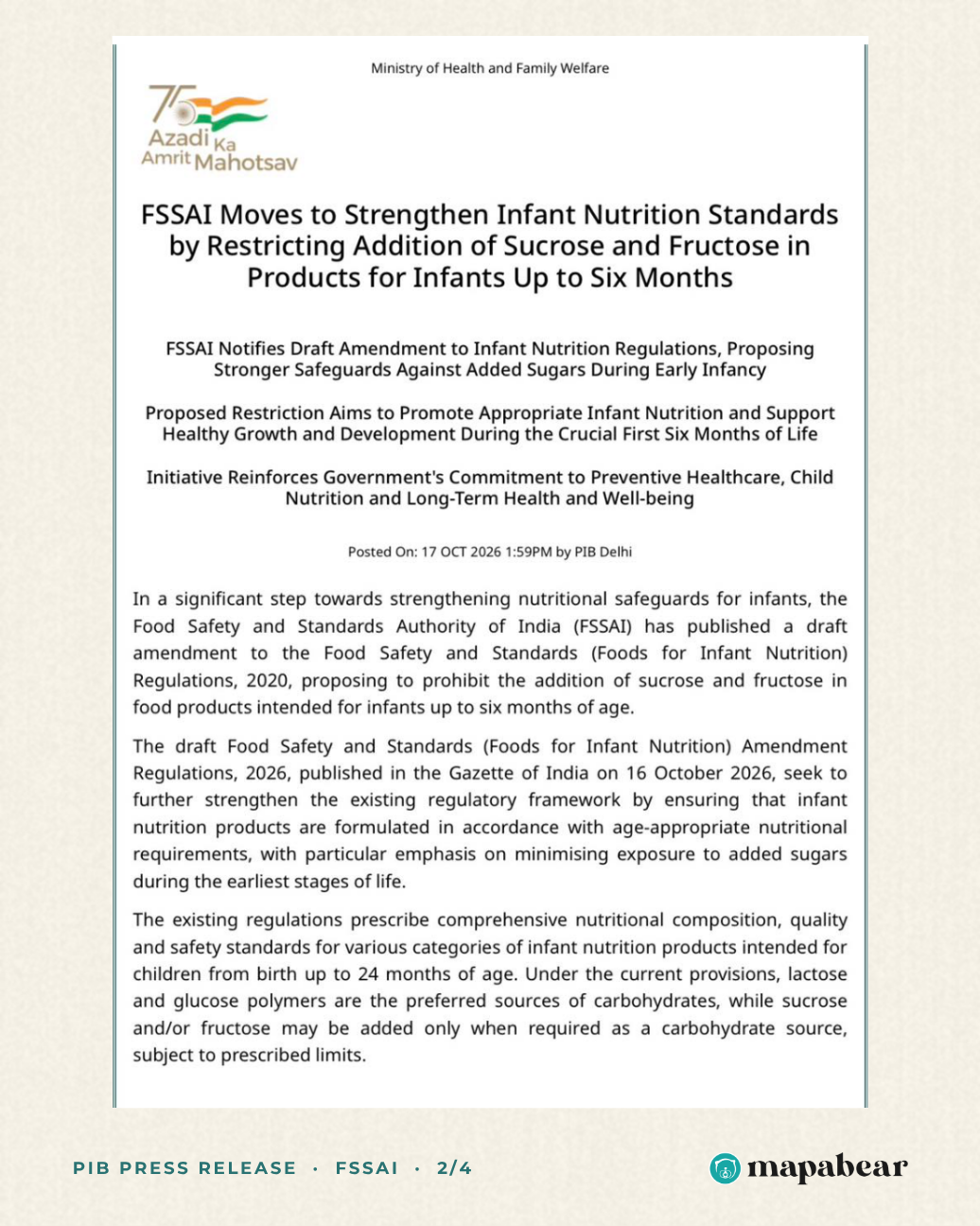
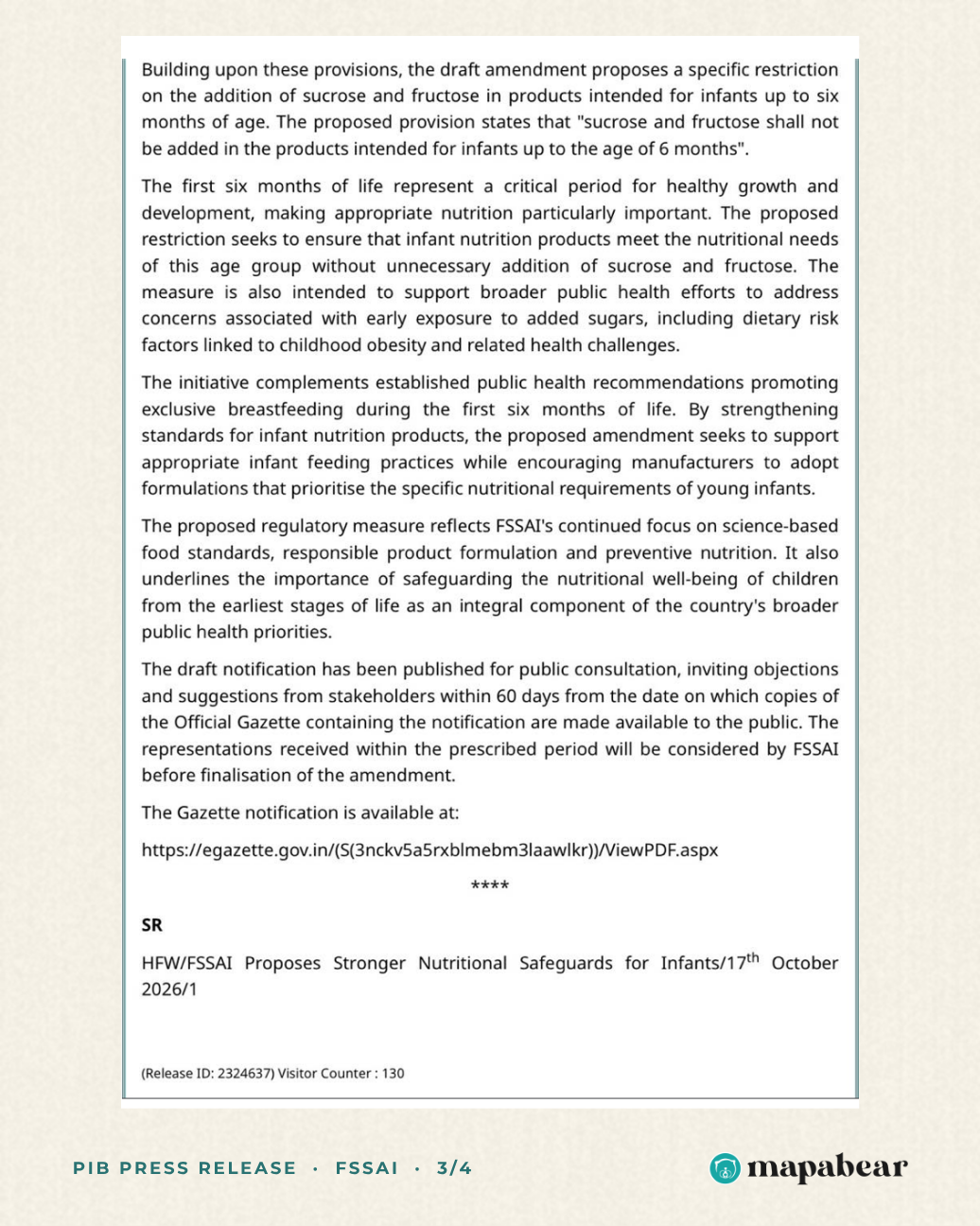
On 16 October 2026, the Food Safety and Standards Authority of India (FSSAI) published a draft rule in the Gazette of India, the government's official record of new laws and notices. It proposes that sucrose (ordinary table sugar) and fructose (fruit sugar) "shall not be added" to any product made for babies up to six months old. The Ministry of Health and Family Welfare announced the proposal the next day on 17th October 2026. The public has 60 days to respond before the rule is finalised.
The proposal is narrow in scope, but it marks a real shift. It removes an exception that current rules allow, and it arrives as fewer Indian babies are being exclusively breastfed than five years ago.
Table of contents [Show]
- What FSSAI has proposed
- But aren't babies meant to have no food before six months?
- What changes: the rule today and the rule proposed
- Why the first six months matter
-
The bigger picture
- The Cerelac question, two years on
- How India compares
- Fewer babies exclusively breastfed
- What the draft does and does not cover
- What parents can do now
- How to have your say
- A small rule with a long reach
- Frequently asked questions
- Sources: Every fact in this article can be checked against the sources below. {
What FSSAI has proposed
The proposal amends the Food Safety and Standards (Foods for Infant Nutrition) Regulations, 2020. These are the rules that decide what can go into every packaged food for babies sold in India, from birth to two years of age.
The change itself is a single line: no added table sugar and no added fruit sugar in products meant for babies aged six months or younger.
But aren't babies meant to have no food before six months?
Yes, and that is exactly why this rule is about formula. Before six months, a baby should not be given solid food, water, juice or any other drink. Everything a baby needs comes from breast milk or infant formula.
In the eyes of the law, formula is a food too. It is the only packaged food made for babies this young, so it is the product this rule changes.
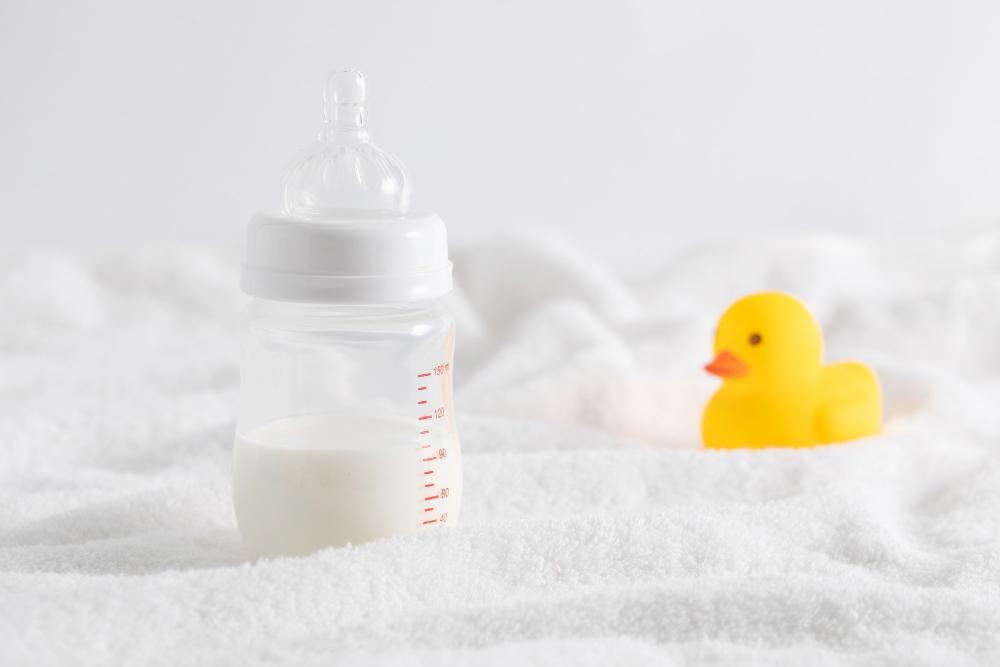
Today, a formula maker is allowed to add table sugar (sucrose) or fruit sugar (fructose) when they need it as a source of carbohydrate, within set limits. Under the now released draft, they would no longer have that choice for babies under six months.
Why this matters: for a baby who is not breastfed, formula is not one part of the diet. It is the whole diet, at every single feed. Nearly half of Indian babies under six months are not exclusively breastfed, according to NFHS-6, and many of them drink formula alongside or instead of breast milk.
The rule may also touch special products for this age group, such as formula for premature babies, gentler formulas for babies with allergies, and supplements added to breast milk for preterm babies. Whether any of these will get an exception is not yet clear from the published draft.
The health ministry gave three reasons for the change:
- The right nutrition at the right age. The ministry describes the first six months as a critical period for a baby's growth and development.
- Less sugar, from the start. It links early exposure to added sugar with childhood obesity and related health problems later on.
- Support for breastfeeding. It says the rule backs the standard advice to give babies only breast milk for the first six months, while improving the products available to babies who need formula.
The rule is not yet in force. FSSAI says it will consider all comments received during the consultation before it issues the final version.
What changes: the rule today and the rule proposed
In short, the rule moves from "avoid sugar unless needed" to "no added sugar at all" for the youngest babies.
The rule today (2020) | The proposed rule (2026 draft) | |
|---|---|---|
Main sugars allowed in formula | Lactose (the natural sugar in milk) and glucose polymers such as maltodextrin (a processed carbohydrate made from corn or rice starch) | No change |
Table sugar or fruit sugar, birth to 6 months | Allowed only when needed, within set limits | Not allowed |
Table sugar or fruit sugar, 6 months to 2 years | Allowed within set limits | Not covered by this draft |
Status | In force | Draft, open for public comment for 60 days |
India's current rule mirrors the international standard for infant formula set by the Codex Alimentarius, the global food standards body run by the WHO and the UN's Food and Agriculture Organization. That standard says table sugar should be avoided unless needed, and fruit sugar should not be added. The draft goes one step further and removes the "unless needed" exception for the first six months.
Why the first six months matter
For a formula-fed baby under six months, formula is not one food among many. It is the entire diet, at every feed, every day. Whatever goes into it, the baby takes in. Health experts and regulators give three main reasons for keeping added sugar out of this period:
- Taste habits start early. Babies are born with a liking for sweet flavours. Regular added sugar in the first months can strengthen that preference before a child has tasted vegetables, grains or other everyday foods.
- Empty calories. A baby's stomach is small, but its nutritional needs are high. Added sugar fills that space without providing the protein, healthy fats, vitamins and minerals a growing baby needs.
- A rare but serious condition. Some babies are born with hereditary fructose intolerance, an inherited condition in which fruit sugar can make them seriously ill. International formula standards single out fructose for this reason, and keeping it out of formula removes the risk altogether.The ministry has also linked the move to rising concern about childhood obesity and lifestyle diseases appearing earlier in life. For most children, those problems do not begin in the first six months. But food habits do.
The bigger picture
The Cerelac question, two years on
Sugar in baby food became a national talking point in April 2024. A report by the Swiss NGO Public Eye and the International Baby Food Action Network (IBFAN) found that 15 Nestlé Cerelac products tested in India contained, on average, about 2.7 grams of added sugar per serving. The report said the same wheat-based cereal was sold with no added sugar in Germany and the UK.
The Consumer Affairs Ministry asked FSSAI to investigate, and the regulator sought an explanation from Nestlé India. The company said its products met both international and Indian standards, and that it had reduced added sugar in its infant cereals by up to 30% over five years.
Those cereals are sold for babies aged six months and above. Because the new draft stops at six months, it does not apply to them.
How India compares
Australia and New Zealand already ban added table sugar and fruit sugar in infant formula, with a small exception for some specialised formulas. The World Health Organization goes further on age: its 2023 guidance on feeding babies and toddlers advises that children aged six months to two years avoid foods and drinks high in sugar, and says sweetened milks are not suitable for them. India's own dietary guidelines, issued by ICMR-NIN in 2024, also advise avoiding sugar for children under two.
Measured against that advice, the draft is a firm first step. It covers the first six months of a two-year window in which experts recommend no added sugar.
Fewer babies exclusively breastfed
The timing is significant. According to the latest National Family Health Survey (NFHS-6), 55.8% of Indian babies under six months are exclusively breastfed, down from 63.7% in the previous survey. This fall came even as more births took place in hospitals and more mothers began breastfeeding within the first hour. As more babies receive something other than breast milk early in life, the quality of that food matters more.
A food rule cannot fix that on its own. Mothers also need practical help with breastfeeding after delivery, workplace protection for those in informal jobs, and support in families where other feeds are introduced too early.
What the draft does and does not cover
Covered: packaged products made for babies up to six months old, which in practice means infant formula.
Not covered:
- Baby cereals, follow-up formulas and other packaged foods for children aged six months to two years.
- Sugar, honey, jaggery or sugar water given at home. Traditions such as ghutti or a drop of honey on a newborn's tongue are still common in many Indian families, and food regulations do not reach them.
- Sweeteners other than table sugar and fruit sugar, which the draft does not mention.
Questions the final rule will need to answer:
- Will specialised formulas, such as those for premature babies or babies with allergies, be given any exception?
- How much time will manufacturers get to change their recipes, and what happens to stock already on shelves?
- Will packs be required to say "no added sugar" so parents can check at a glance?
What parents can do now
This rule is not a reason to feel guilty about using formula. Many babies need it, for medical, practical or personal reasons, and a suitable formula is safe nutrition. The aim is simply to make every formula on the shelf a little better.
- Read the ingredient list, not just the front of the pack. Look for sucrose, sugar or fructose among the ingredients. Lactose and maltodextrin (a glucose polymer) are standard carbohydrates in formula.
- Do not switch formulas on your own. If you have questions about your baby's formula, talk to your paediatrician first, especially for specialised or hypoallergenic formulas.
- Nothing sweet before six months, at home either. That includes sugar water, gripe-water-style remedies, jaggery and honey. Honey should not be given to any baby under one year because of the risk of infant botulism.
- Seek breastfeeding support early. If you want to breastfeed and are struggling, a lactation consultant or your hospital's postnatal team can help in the first days, when it matters most.
- Keep reading labels after six months. Infant cereals and toddler drinks are outside this draft. WHO and ICMR-NIN advise against added sugar for children under two.
This article is for information and is not medical advice. Please consult your paediatrician about your baby's feeding.
How to have your say
Anyone can comment on the draft, including parents, doctors, lactation consultants, NGOs and manufacturers. Comments are open for 60 days from the date the Gazette was made available to the public, which puts the deadline around mid-December 2026.
The Gazette notification sets out where to send comments. The draft and the submission details are also listed under draft notifications on the FSSAI website.
A small rule with a long reach
The draft changes one line in one regulation, but it sets out a clear principle: a baby's first food should not be sweetened.
Two bigger questions remain. Will the same principle be extended to the cereals and drinks babies start on at six months? And will India put as much effort into helping mothers breastfeed as it does into regulating the products that replace breast milk? The consultation is an opportunity for parents to be heard on both.
Frequently asked questions
What has FSSAI proposed about sugar in infant food? FSSAI has proposed that sucrose and fructose must not be added to any food product intended for infants up to six months of age. The draft amendment to the Foods for Infant Nutrition Regulations was published on 16 October 2026 and is open for public comment for 60 days.
Is the ban already in force? No. It is a draft. FSSAI will review comments received during the 60-day consultation before finalising it.
Does it apply to baby cereals like Cerelac? No. Infant cereals are labelled for babies from six months, and this draft covers only products for babies up to six months.
Is there sugar in infant formula in India today? Under current rules, formula mainly uses lactose, the natural sugar in milk, and maltodextrin, a carbohydrate made from starch. Table sugar or fruit sugar can be added only when needed, within limits. The ingredient list on the pack will tell you.
When can babies have sugar? WHO and ICMR-NIN advise avoiding added sugar for children under two. Honey should not be given before the first birthday.
Can I give my newborn sugar water or ghutti? Paediatric guidance recommends breast milk or formula only for the first six months, with no water, sugar water, honey or other feeds unless a doctor advises it.
Sources: Every fact in this article can be checked against the sources below.
The draft rule
- Ministry of Health and Family Welfare, press release on the FSSAI draft amendment, Press Information Bureau, 17 October 2026
- FSSAI, draft notifications and consultation details
Feeding guidance
- World Health Organization, exclusive breastfeeding for the first six months
- World Health Organization, Guideline for complementary feeding of infants and young children 6–23 months, 2023
- ICMR-National Institute of Nutrition, Dietary Guidelines for Indians 2024, as reported by Down To Earth
- Poison Control (US), why honey should not be given to babies under 12 months
Standards in India and abroad
- Codex Alimentarius, Standard for Infant Formula (CXS 72-1981)
- Food Standards Australia New Zealand, Standard 2.9.1, Infant Formula Products
Data and earlier reporting
- National Family Health Survey (NFHS-6), exclusive breastfeeding findings, as summarised by PW Only IAS
- Public Eye and IBFAN report on Cerelac, as reported by Onmanorama, India Retailing and The Statesman, April 2024
 Guiding and Empowering Parents with fact-checked excellence -