
“I don’t usually open up like this,” Pallabi begins. “I’m an extrovert, but I’m also very guarded.”
And at the age of 12, she witnessed a trafficking incident, an experience that would later define her life’s work. Her childhood, she says, was far from easy. She lost her father when she was in Class 12.
“I struggled deeply with people-pleasing,” she admits. “I did many things that went against my conscience, and that led to intense guilt later in life.” That guilt spiralled into overthinking, and eventually into emotionally and physically abusive relationships. “I gave everything in those relationships. Today, I don’t even give one percent of that emotional surrender to my husband. I’ve become guarded.”
Abandonment became a recurring pattern from friends, from “rakhi brothers,” from romantic partners. “It was a chain of abandonment,” she reflects. “Only recently did I understand how deeply it affected me.”
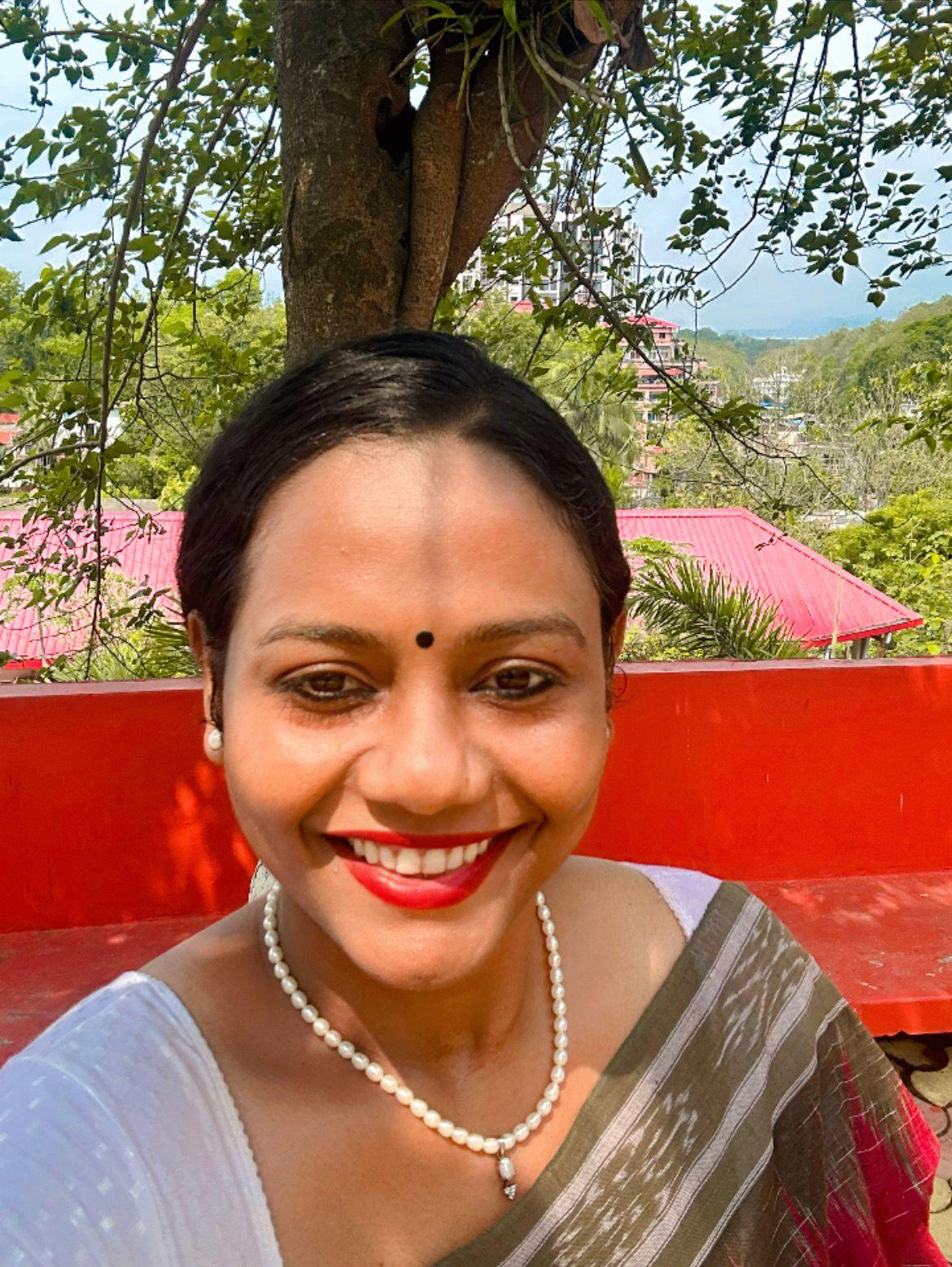
She also recalls humiliation in school. Despite being a bright student, she faced discrimination and passive-aggressive behaviour. One incident still scars her: a woman slapped her 50 times in front of her class for something she hadn’t even done. “No one stood up for me. Not even the person I had always supported.”
Looking back, she says, “I won’t say my childhood was entirely bad. But it was filled with humiliation and emotional neglect. And our parents are human too, they make mistakes. They’re not gods.”
From Research to Rescue Operations
Before founding her own initiative Impact Dialogue Foundation, Pallabi worked for nearly eight years with anti-trafficking organisations. For five years, she travelled across India conducting rescue operations involving child marriage[KR3] , prostitution, organ trafficking, and post-marriage trafficking cases.
“My goal was always to rescue a child not to appear on the front page of a newspaper,” she says firmly.
She later joined another organisation that hired her for her language skills - Bengali, Assamese, Nepali, and Odia, these are the languages spoken in many trafficking source areas. Initially assigned research work, she eventually returned to field rescues when her team realised her operational strengths.
“I had been researching violence and trafficking since I was twelve,” she reveals. “This was not accidental work. It was something I had been preparing for my entire life.”
Has Trafficking Stats Improved Over the Years?
Without hesitation, she responds: “It has become worse. Much worse.”
According to Pallabi, trafficking has evolved with technology. “It’s digital now. There’s social media grooming, deepfakes, fake accounts, the dark web. Transactions happen through UPI, Paytm, Google Pay. No cash trail. One Aadhaar card can generate multiple SIM cards. It’s harder to trace.”
Earlier, trafficking was often linked to poverty, illiteracy, and unemployment. While those factors still exist, Pallabi says the profile has changed.
“Now it’s also happening in affluent families. Not because of poverty but because of emotional neglect. Parents provide everything except time.”
She recalls a case involving a senior civil officer’s daughter who was groomed online through Discord. The teenager ran away with a 20-year-old boy she met online. “When produced before the Child Welfare Committee, she refused to go home. She said her parents never gave her time. And that’s how loneliness creeps in. That’s how they get into social media and talk to the wrong people.”
“The lesson,” Pallabi says, “is simple. If you cannot give your child time, don’t have a child.”
Grooming: It’s Rarely a Stranger
Contrary to popular belief of “Stranger Danger”, Pallabi insists that trafficking is rarely about kidnapping anymore.
“It is mostly grooming. Luring. Manipulation,” she explains. “And most traffickers are known to the victim.”
Traffickers identify vulnerabilities like loneliness, tension, hunger, confusion. “They observe children in crisis [KR6] moments at railway stations, in crowded spaces. A child separated from a parent. A hungry child. A distressed child. They step in as helpers.”
That calculated emotional manipulation is the real pattern these predators follow.
The Rise of New Forms of Trafficking
Beyond sexual exploitation and organ trade, Pallabi highlights a disturbing trend: skin trafficking.
“There is a growing demand in cosmetic and reconstructive procedures abroad. Skin from South Asia is trafficked and sold to Europe, UK, and US. People there have a lot of skin issues like skin cancers, eczema” she says. “It’s not widely discussed, but it is real.”

She also points to forced labour in factories - bindi factories, cracker factories, slaughterhouses where children are used as cheap, voiceless labour. “We are indirectly supporting it through our consumption.”
Trafficking, she explains, is a chain reaction: poverty leads to illiteracy, which leads to unemployment, migration, identity crises, and eventually exploitation.
After the Rescue: The Invisible Battles
“Rescue is just the beginning,” Pallabi says.
The real struggle begins afterward - stigma, rejection by family, lack of compensation, humiliation, and a painfully slow justice system. “One survivor recently received compensation after ten years. The justice system, in these cases, feels like a joke.”
Acceptance is often the hardest battle. Many survivors are married off quickly, sometimes to men who later abandon them after learning about their past.
“Healing is not automatic,” she says. “It requires sustained support.”
Are Perpetrators Born Criminals?
Pallabi’s answer is complex.
“No one becomes a criminal overnight,” she says. She recalls meeting an accused trafficker in Tihar Jail who told her he grew up watching his father rape his mother. “Childhood conditioning and trauma shape people. It’s a mix of many factors.”
Yet, she notes, there is almost no rehabilitation framework for accused traffickers. “They are treated only as criminals, not as products of broken systems.”
Fear, Threats and Standing in Court
When asked if she fears for her safety, she answers quietly: “I don’t fear for myself. I fear for my family.”
She avoided disclosing her marriage publicly for years and changed travel patterns frequently to stay safe.
In one court case, she identified an accused who had trafficked a 13-year-old girl and sold her 25 times. The defence tried to confuse her with irrelevant questions. “I told them I can never forget his face.”
Months later, after her podcast went viral, the same defence lawyer treated her with unexpected politeness. “Visibility changes behaviour,” she observes.
The Uncomfortable Truth
“What policymakers and media avoid admitting,” Pallabi says bluntly, “is that we are enabling this industry.”
Human trafficking is a billion-dollar global economy. “Arms, drugs, humans - humans can be sold repeatedly. That makes them profitable.”
She also points out the irony: “Everyone wants to give me awards. But no one wants to fund the actual work.”
What Can Ordinary Citizens Do?
“Stop being bystanders,” she says.
If you see harassment on the street, intervene. If a child appears distressed, pay attention. Speak up in hit-and-run cases. Report suspicious activity.
Most importantly, she urges parents to begin conversations early.
“Teach children about good touch and bad touch as soon as they can speak. Teach them about privacy and consent regardless of gender. Parents must listen to their children and take them seriously.”
She ends with a broader call: “Trafficking is only one part of a larger culture of violence - domestic abuse, child abuse, neglect. Change begins at home. Awareness is the first step.”
Pallabi does not like to call herself an “activist.”
“These labels can become red flags,” she says with a knowing smile.
But labels aside, her life’s work is clear - rescuing, rehabilitating, and relentlessly confronting a system most people would rather not see.
And perhaps her most haunting statement lingers the longest:
“Until it happens in your own home, you don’t care.”
About Pallabi Ghosh
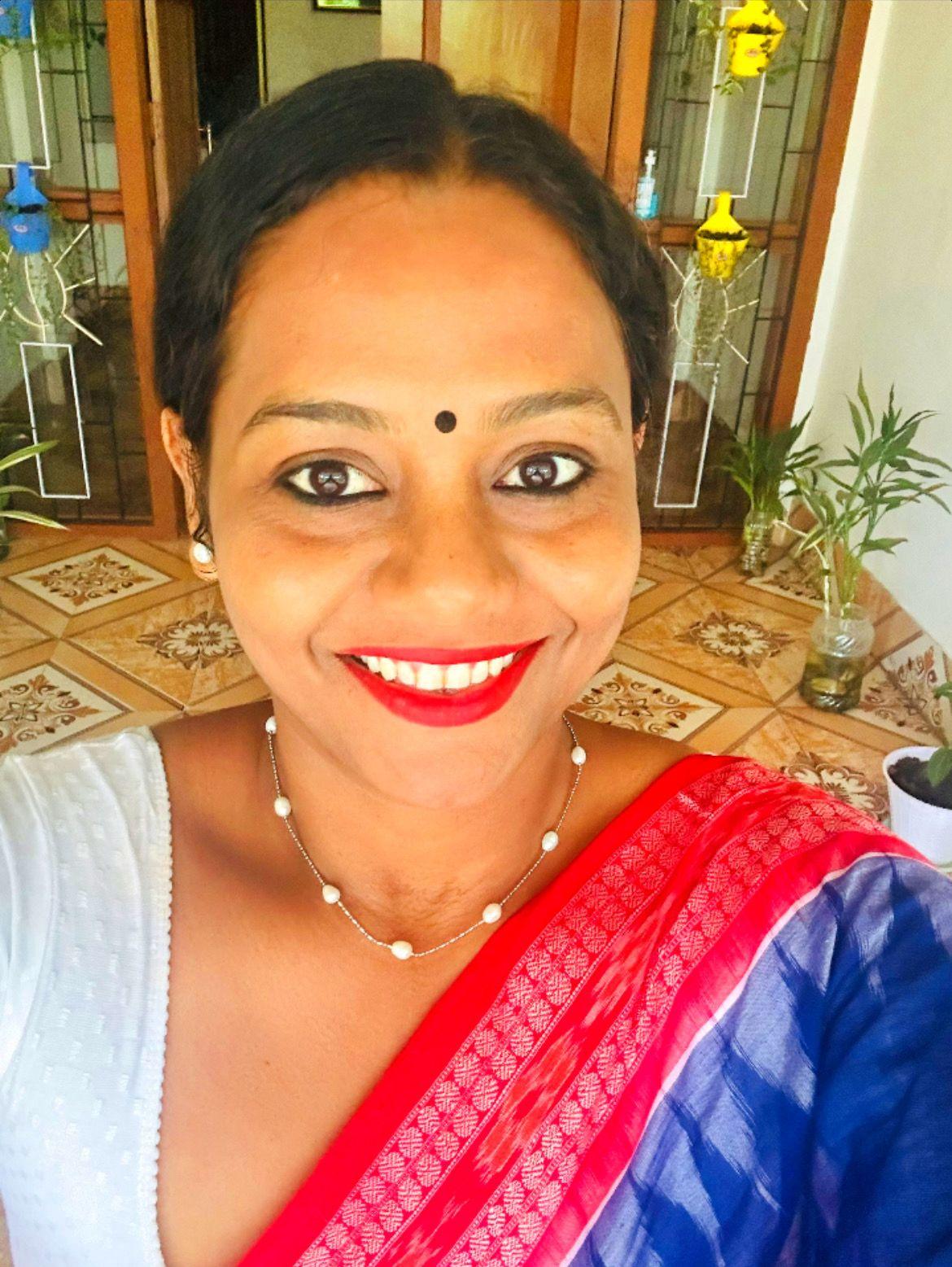
Pallabi Ghosh is one of India’s leading anti-trafficking activists and a human rights defender with over a decade of field experience in rescuing, rehabilitating, and reintegrating survivors of human trafficking, child marriage, and exploitation. Working extensively across source, transit, and destination regions in India, she has led interventions that have helped thousands of vulnerable women and children. Pallabi’s work integrates direct rescue operations with long-term rehabilitation, community education, and systemic advocacy. Her voice has become a powerful call to recognise trafficking not merely as a crime of poverty, but as a complex crisis of vulnerability, digital grooming, emotional neglect, and policy gaps.
In recognition of her impact, Pallabi was honoured with the Ramoji Excellence Award 2025 in the Women’s category for her transformative work in rescuing and rehabilitating trafficking survivors. The award, presented at Ramoji Film City in Hyderabad, celebrated her leadership and the tangible difference she has made in the lives of over 10,000 survivors and tens of thousands more affected by exploitation.
About Impact and Dialogue Foundation
Impact and Dialogue Foundation (IDF) is the grassroots organisation founded by Pallabi Ghosh that drives her anti-trafficking mission. Under her leadership, IDF focuses on:
- Rescue and intervention in human trafficking, child marriage, exploitation, and related abuse
- Rehabilitation and reintegration of survivors through counselling, life-skills training, education and livelihood support
- Legal support and advocacy, including navigating court systems and empowering survivors with agency
- Community education, awareness campaigns and training first responders in rural and urban source areas
- Digital safety initiatives addressing emerging threats like online grooming and exploitation networks
IDF’s work extends beyond rescue emphasising holistic support that prevents re-trafficking, builds economic independence, and restores dignity. The foundation operates through community outreach, grassroots education, collaboration with law enforcement, and survivor-led initiatives that strengthen local resilience against exploitation.
Please Note: If you would like to support rescue, rehabilitation and survivor reintegration efforts led by Pallabi Ghosh and Impact Dialogue Foundation, you can contribute directly to their ongoing work.

 Guiding and Empowering Parents with fact-checked excellence -